
Mid-Season Problem Patches: How to Use Mavic 3M Scouting to Target Sprays Before Issues Spread
By mid-June, your fields stop being uniform. Wet corners, compacted knolls, disease pockets, and uneven emergence all start showing up at once — and they spread fast if you miss them. The question is not whether problems exist. It is where they are, how far they have moved, and how much time you have before a targeted fix becomes a blanket rescue pass.
This is exactly what the DJI Mavic 3M was built for. Not spring planning. Not harvest analysis. Mid-season, real-time variability detection — the kind that turns a problem patch into a manageable prescription zone instead of a field-wide headache.
What Shows Up in June — and Why It Spreads
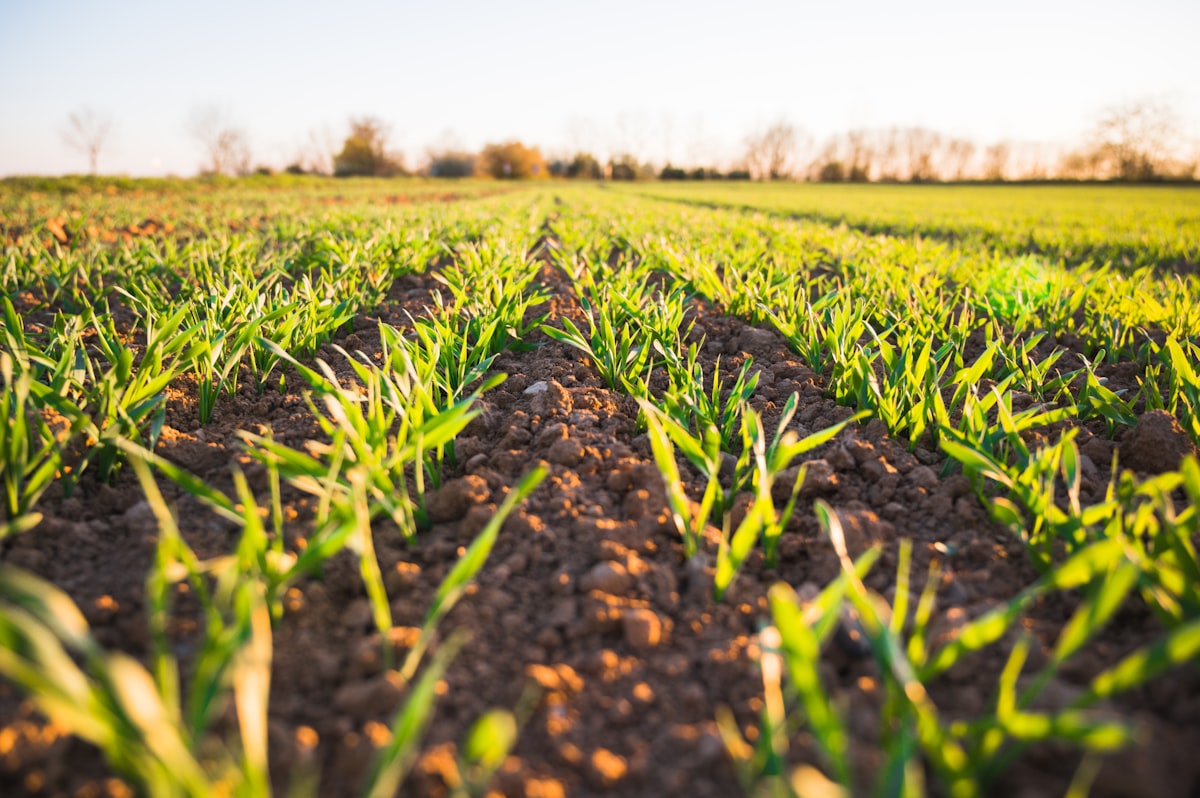
June sits in a difficult window. Your crops are actively growing, canopy is closing, and stress events — wet feet, early fungal infection, nutrient lock-up, insect pressure — are often invisible from the road until they have already colonized a meaningful portion of your field.
Wet spots and ponding damage. Standing water or prolonged saturation causes root stress and creates anaerobic soil zones. Even after the water recedes, the plants in those areas are weeks behind their neighbours — and that yield gap does not recover on its own. Sclerotinia and other soil-borne pathogens thrive in exactly these conditions.
Uneven stands and emergence gaps. What looked uniform at seeding can reveal significant variability by mid-June. Seed placement issues, crusting events, herbicide carryover, and rodent pressure all leave gaps that are easy to miss during road scouting — and that represent real production loss if left unaddressed.
Early disease development. Septoria, powdery mildew, stripe rust, and sclerotinia all begin as isolated infections before spreading outward through field-level air movement, equipment traffic, and canopy contact. Identifying and treating the initial foci matters enormously — a targeted fungicide application at the infection centre can prevent a 10-acre problem from becoming a 200-acre one.
Nutrient and heat stress pockets. Variable soil texture, drainage, and organic matter mean your field is not being fed or stressed equally. Nitrogen deficiency in lighter soils, potassium issues in knolls, and heat stress in poorly-drained areas all show up in crop colour and canopy density — visible in multispectral imagery long before yield loss is locked in.
A targeted fungicide application at the infection centre can prevent a 10-acre problem from becoming a 200-acre one.
How the Mavic 3M Finds Variability Faster Than Road Scouting
Road scouting gives you a sample. The Mavic 3M gives you the whole picture. That is not a marketing claim — it is a function of what the sensors actually capture.
The Mavic 3M carries five dedicated spectral sensors alongside a 20MP RGB camera, measuring wavelengths the human eye cannot see and generating the indices that indicate plant physiology rather than just colour.
The result is a full map overlay — generated within DJI Terra — showing your entire field coloured by plant health index. The problem zones are not hidden on the back corner of a quarter you did not walk. They are highlighted on a georeferenced grid, complete with GPS coordinates you can navigate back to for ground-truthing.
What NDVI and NDRE Actually Tell You
NDVI (Normalized Difference Vegetation Index) compares near-infrared and red light reflectance to quantify canopy health and density. It is your broadest health flag — a drop in NDVI across a zone tells you something is wrong there, even if you cannot yet say what.
NDRE (Normalized Difference Red Edge Index) uses the red-edge band to detect chlorophyll content changes before they become visible to the eye. NDRE is the index that catches early-stage nitrogen stress, initial fungal infection, and subtle root issues weeks before NDVI would register anything unusual. For mid-season scouting, NDRE is often the more actionable of the two.
Road Scouting
- Sample points only — gaps between stops are guesswork
- Canopy coverage hides interior problems
- Equipment traffic can spread disease during scouting
- No georeferenced record for week-over-week comparison
- Time-intensive for larger operations
Mavic 3M Scouting
- Full-field coverage at 2–5 cm/px resolution
- Detects subsurface and pre-visual stress signals
- No field traffic or compaction involved
- Georeferenced maps enable week-to-week overlay comparison
- A 160-acre flight takes under 30 minutes
A Simple Mid-Season Workflow: Fly, Map, Decide, Treat
The Mavic 3M workflow does not need to be complicated. For mid-season scouting, the goal is clarity and speed — getting from flight to field decision in the same day. Here is how it breaks down in practice.
Plan your flight in DJI Terra
Set your mapping mission the night before. Define field boundaries, set altitude (typically 60–90m for most crops), and confirm overlap settings. The Mavic 3M's RTK module ensures imagery is accurately georeferenced — essential for overlaying maps across multiple flights.
Fly early — ideally before 10 AM
Calmer wind conditions and consistent solar angle improve data quality. The Mavic 3M's battery supports 43-minute flights, typically covering 200+ acres per battery on a standard mission. Have a second battery ready for larger operations.
Process the map in DJI Terra
Terra processes multispectral data into NDVI, NDRE, and RGB orthomosaics in roughly 20–40 minutes depending on field size. Export your index maps and review the false-colour overlay. Flag zones below your crop-specific threshold — most agronomists set this during the first flight of the season.
Ground-check the flagged zones
This step is non-negotiable. Maps identify where to look — they do not replace eyes on the ground. Walk the flagged zones, confirm what you are seeing (disease, pest, moisture), and assess severity before deciding on treatment type and urgency.
Generate a prescription zone and decide on treatment
Export your zone boundaries as shapefiles compatible with your spray equipment or spray-drone controller. Operations running DJI Agras T-series drones can import these zones directly for targeted applications — treating only the affected area.
Treat the zone, then re-scan
Targeted treatment works best when followed by a rescan 10–14 days later. Comparing your pre- and post-treatment NDVI maps confirms whether the intervention worked and whether the stress zone has stabilized or continued to expand.
Targeted Spraying vs. Blanket Passes
Blanket fungicide or pesticide applications are the default when you do not have location data. They cost more in product, more in equipment time, and — in some cases — create unnecessary chemical load on healthy areas of the field that did not need treatment.
When you have a georeferenced stress map, the calculus changes entirely. A 30-acre infection zone in a 320-acre field becomes a targeted prescription rather than a 320-acre spray pass. Product use drops. Application time drops. And critically, you avoid running equipment through healthy portions of your field during a critical growth stage.
The math on targeted vs. blanket spraying
Consider a fungicide application at $18/acre for product alone. A 320-acre blanket pass costs $5,760. If mapping identifies a 40-acre problem zone, targeted treatment costs $720 — a saving of over $5,000 on a single application, before factoring in equipment time, fuel, and crop disturbance on healthy areas. Even accounting for the cost of mapping, the numbers move decisively toward precision every time.

Re-Scanning and Tracking Change Week-to-Week
A single flight tells you where things stand today. The real value of the Mavic 3M in a mid-season scouting program comes from flying consistently — once a week or once every 10 days during the critical June–July window — and comparing maps over time.
DJI Terra's orthomosaic outputs are georeferenced, which means you can overlay a June 10 NDVI map directly on top of a June 24 map using any GIS viewer or the free version of QGIS. Stress zones that are stable are not urgent. Stress zones that are expanding need immediate attention. Zones that have improved after treatment confirm your intervention worked.
Week 1 — Baseline flight
Establish your first map at full canopy development. Identify any stress zones present and record their GPS boundaries. Ground-check all flagged areas before making treatment decisions.
Week 2 — Post-treatment scan
Re-fly zones where treatment was applied. Look for NDVI stabilization or improvement. Note any new stress development in previously healthy areas of the field.
Week 3 — Full-field rescan
Full second pass with overlay comparison against Week 1. Identify whether existing stress zones have expanded, contracted, or held. Flag any new problem areas and prioritize for ground-truthing.
Week 4+ — Decision gate
By late June or early July, your treatment window for most fungal and pest issues is narrowing. Week 4 data tells you whether you are ahead of the problem or need to escalate — information that simply does not exist without weekly mapping.
This kind of temporal tracking also builds an agronomy record with value beyond the current season. Year-over-year stress maps highlight recurring problem areas — wet corners, compaction lanes, persistent disease pressure — that inform variety selection, tile drainage decisions, and input placement for the following year.
Stress zones that are stable are not urgent. Stress zones that are expanding need immediate attention.
Getting Started Is Simpler Than You Think
The Mavic 3M is a portable, compact system that packs into a carry case and can be operational in under five minutes from a field road. You do not need a dedicated operator or a full drone program to get value from it mid-season. If you are already doing any level of crop scouting, adding the Mavic 3M to your process adds an hour to your day and turns your scouting outputs from rough notes into a precise, georeferenced field map.
For operations already running DJI Agras spray drones, the integration is particularly clean — the same GPS coordinate system, compatible zone exports, and a workflow that goes from flight to targeted application without switching platforms.
Vantage Drones Canada offers mapping demos and consultations across Manitoba and the broader Canadian agricultural market. If you want to see what a Mavic 3M flight reveals on a field with known variability, that is exactly what a demo is for — one flight, your field, your data.
See What's Hiding in Your Field
Book a Mavic 3M mapping demo or request a consultation with our team. One flight. Your field. Real data — before the problem spreads.