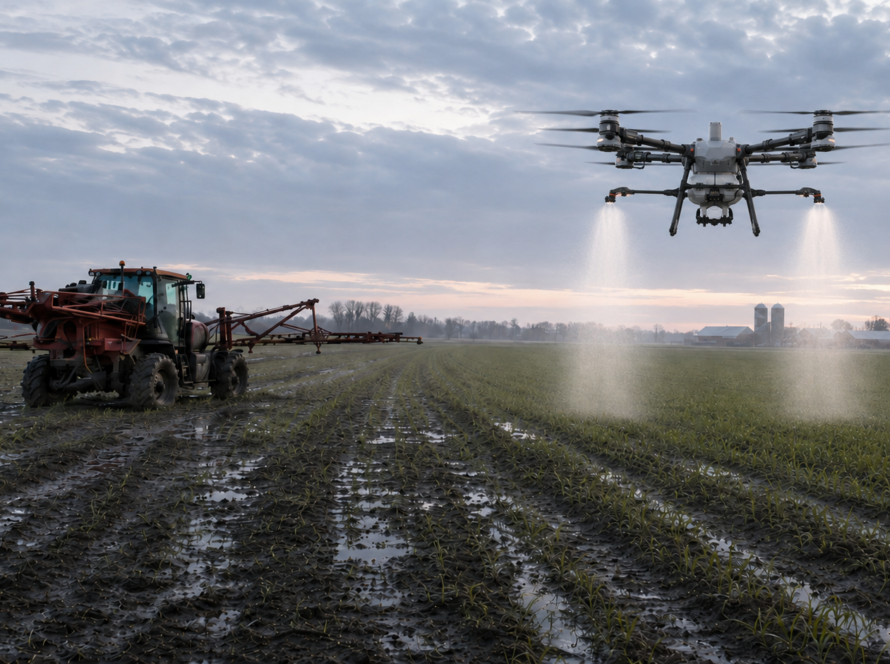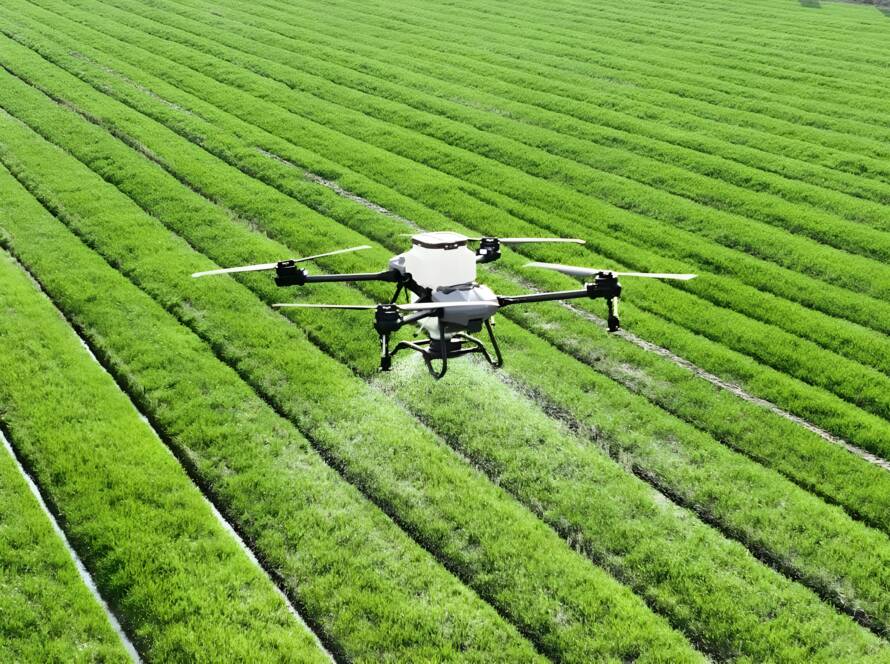

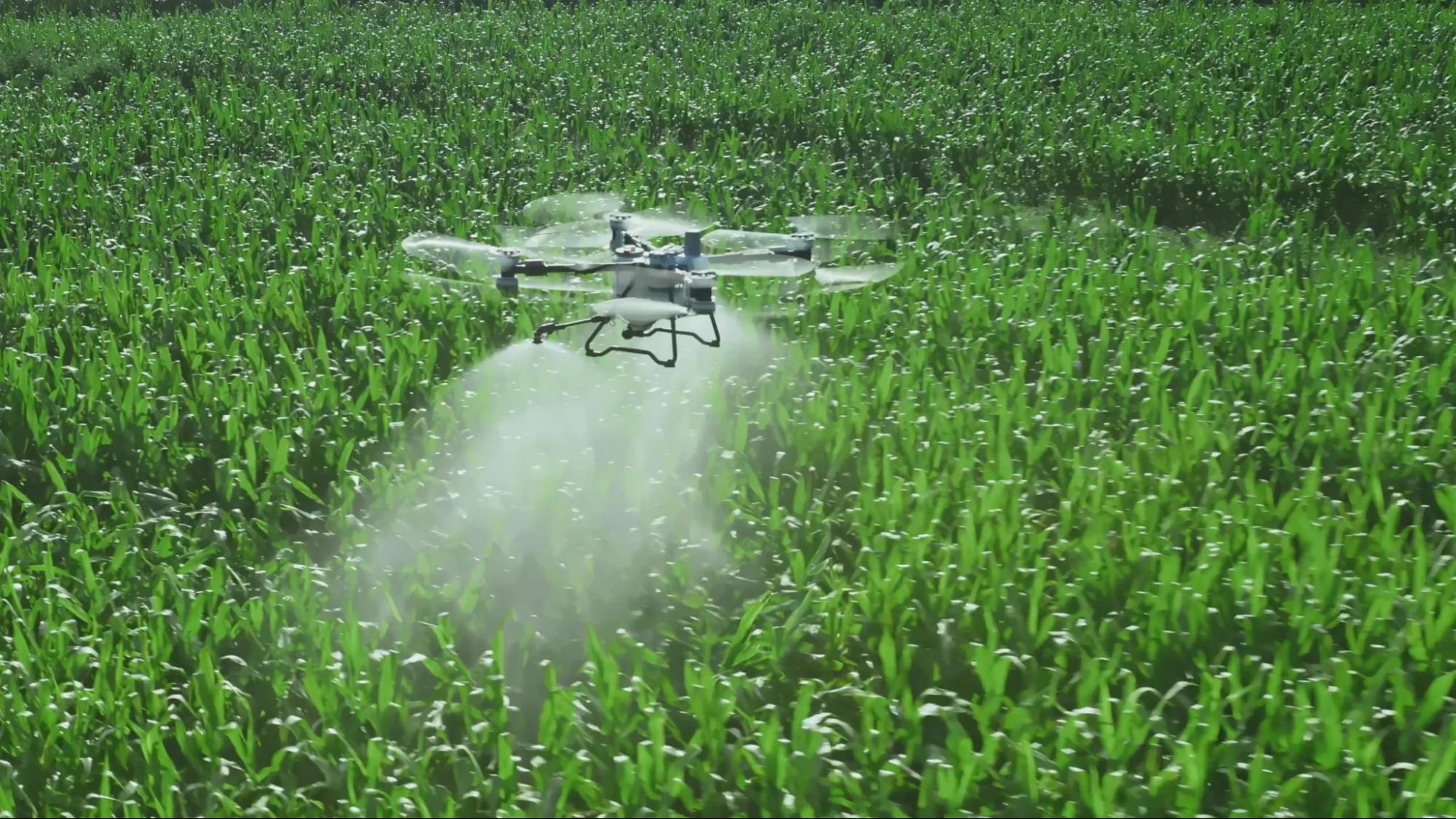
By 2026, spray drones are no longer an “early adopter” experiment. Most Canadian growers looking at drones today are not chasing a gadget. They are trying to solve the same pressures that show up every season: tight spray windows, wet ground, labour bottlenecks, and the cost of being late.
So the real question is not whether spray drones work.
It is whether a spray drone is worth it for your farm.
This guide is written for Canadian producers who want a clear, realistic way to evaluate the decision. We will cover when spray drones make sense, what costs to consider, how ownership compares to using a custom applicator, how mapping with the DJI Mavic 3M can improve decision-making, and how to choose between the DJI Agras T25, T50, and T100.
Quick answer: when a spray drone is usually worth it
A spray drone is worth a serious look if you answer yes to at least two of the following:
- You regularly miss spray windows due to weather, wet ground, or scheduling delays
- Access issues prevent timely applications (soft ground, irregular layouts, challenging terrain)
- Labour is tight during peak season and spraying becomes a bottleneck
- Crop damage or compaction from ground equipment is a real cost
- You rely on a custom applicator and timing is not always in your control
- You want to treat specific problem zones without doing a full-field pass
If none of these apply, a drone can still be useful, but it may not be the best investment this season.
Why Canadian farms are choosing spray drones in 2026
Canadian conditions often make one variable matter more than anything else: timing.
Tight spray windows and weather pressure
When wind and rain compress your workable days, waiting is expensive. A spray drone can help you move quickly when a window opens, especially when ground equipment or contractor schedules are the limiting factor.
Low-wind hours and autonomous planning
In many areas, the calmest conditions show up early in the morning and later in the evening. With repeatable route planning and consistent application patterns, modern Agras workflows make it easier to take advantage of those low-wind windows with less setup time and more predictable coverage. For some operations, this can also include planned night spraying to work within calmer conditions, provided you have the right lighting, procedures, and compliance steps in place.
Wet ground and limited access
In many regions, access is the problem. If fields are too soft for a rig without damage, the drone option becomes less about convenience and more about protecting timing.
Reduced crop damage compared to ground passes
For some farms, the cost is not only fuel and labour. It is wheel tracks, compaction, and crop loss from repeated passes.
Labour constraints and peak-season overload
A drone does not eliminate labour, but it can remove bottlenecks. The win is often operational flexibility, not “automation.”
Spray drone costs in Canada: what to consider without unrealistic promises
If you want a realistic ROI discussion, do not start with “cost per acre.” Start with the full cost of delay and the full cost of your current approach.
The cost of being late
When timing slips, treatment effectiveness can drop and you can end up chasing the problem later. That can mean extra passes, higher pressure, and more stress when everything stacks up at once.
For many farms, this is the real value of a spray drone: it protects timing.
Labour and scheduling efficiency
Even if total labour cost stays similar, farms often see value because the workflow becomes easier to manage during peak season. The operation becomes less dependent on one machine, one operator, or one contractor schedule.
Ground equipment wear, fuel, and opportunity cost
Ground rigs bring fuel and maintenance, plus the opportunity cost of tying up equipment and people when they are needed elsewhere. A drone shifts costs toward batteries, charging, and planned maintenance.
The elephant in the room: transport, water, and staging
This is where many “paper ROI” estimates fall apart.
A spray drone setup is a system, not just an aircraft. In Canada, the limiting factor is often not the drone. It is the logistics:
- Water supply and refill speed
- A trailer or nurse setup that keeps the operation moving
- Safe chemical handling and a consistent mixing workflow
- Field staging so the drone is flying, not waiting
If you plan staging properly, drones feel efficient. If you do not, even a high-capacity drone can feel slower than expected.
Where the DJI Mavic 3M fits in: crop health insight that improves spray decisions
A strong spray program is not only about applying products. It is about applying in the right places, at the right time.
That is where multispectral mapping adds real value.
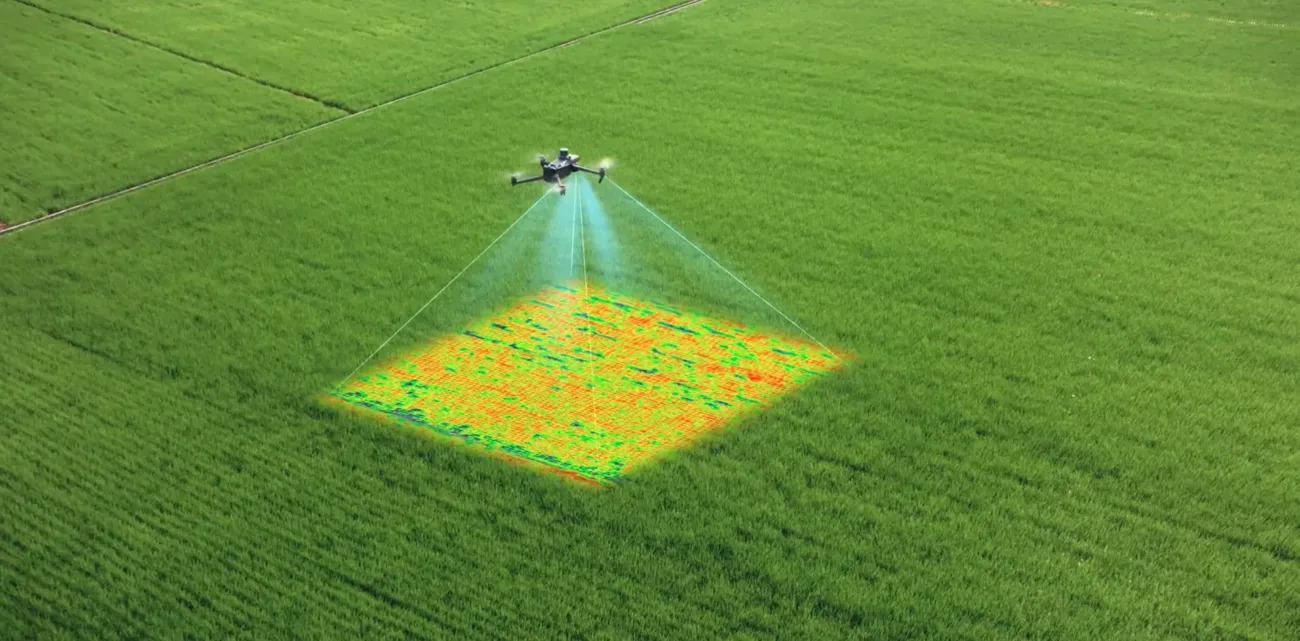
The DJI Mavic 3M is commonly used to capture crop imagery that helps identify variability across a field, so you can focus scouting and make more informed decisions before you spray. Instead of guessing, you can prioritize areas that need attention and avoid treating everything the same way.
In 2026, many farms already use satellite-based tools, but a Mavic 3M flight can give you higher-resolution, field-level detail on the exact day you need it, and it avoids the common problem of cloud cover obscuring satellite imagery during critical windows.
In practical farm terms, the Mavic 3M can help you:
- Identify zones that are underperforming compared to the rest of the field
- Direct scouting so time is spent where it matters
- Track crop uniformity changes after weather events or management decisions
- Build a more targeted plan before committing to a full-field application
For farms aiming to move beyond blanket passes, pairing mapping with spraying strengthens the case for targeted work. The Mavic helps you decide where to focus. The Agras helps you execute.
Learn more about the DJI Mavic 3M: https://vantagedrones.ca/dji-mavic-3m/
Spot spraying and targeted application: why this is a major adoption driver
Many farms adopt spray drones not to replace every acre of ground spraying, but to handle the work that never fits neatly into a traditional schedule:
- Problem patches that do not justify a full-field pass
- Edges, corners, awkward field shapes
- Rapid response when issues appear
- Areas where access is limited
This does not automatically mean lower input use for every operation. The consistent benefit is control and speed.
Owning a spray drone vs using a custom applicator in Canada
A good custom applicator can be the best option for many farms. Saying that out loud matters because it shows you are making a fit-based recommendation, not a sales pitch.
Custom application can be a better fit if:
- Spraying needs are infrequent
- Your acres are smaller or windows are usually manageable
- You have reliable access to an applicator when timing matters
- You do not want to manage training, maintenance, and staging
Ownership can be a better fit if:
- Timing windows are repeatedly missed due to delays
- Wet ground and access constraints are common
- You want schedule control during peak season
- You have enough workload to keep the system active
- You want in-house capability and repeatable results
A useful way to think about it is this: if missed timing costs you more than ownership and setup costs, a drone becomes easier to justify.
T25 vs T50 vs T100: the simplest way to compare them
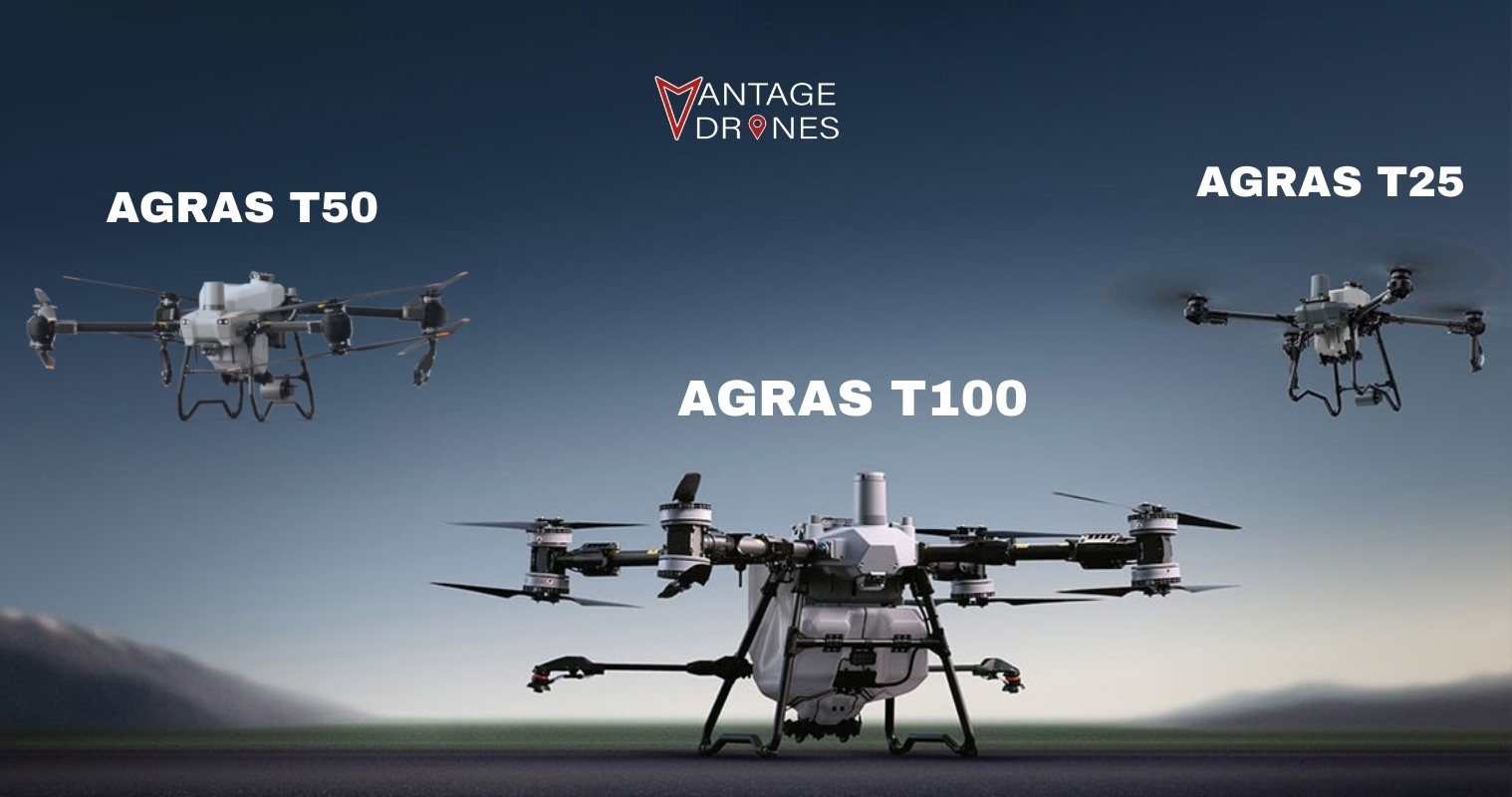
Below is a clean comparison using the practical numbers that matter to farmers: payload and coverage per hour.
Comparison: DJI Agras T25 vs T50 vs T100
| Feature | DJI Agras T25 | DJI Agras T50 | DJI Agras T100 |
| Spray payload | 20 L (20 kg) | 40 L (40 kg) | 100 L (100 kg) |
| Spread payload | 25 kg | 50 kg | 100 kg |
| Coverage per hour | 30 acres per hour | 40 to 60 acres per hour | 80 acres per hour |
| Best for | Solo use, smaller acreages, tight spots | Larger farms needing heavier coverage | Very large farms, maximum efficiency |
Note on the T50: the T50 can reach up to 60 acres per hour in specific configurations, but expect closer to 40 acres per hour under heavier coverage conditions.
What the numbers really mean
The biggest productivity jump is not subtle:
- The T50 is a scale-up from the T25 when you need more capacity and stronger daily output
- The T100 is a different class. With 100 L spray capacity and 80 acres per hour capability, it reduces how often you stop to refill and helps keep more of the day in productive flight time
If your operation is large enough that time lost to refills and resets is the real pain point, the T100 is often the model that makes drone spraying feel like a true production tool.
Explore the models here:
DJI Agras T25: https://vantagedrones.ca/dji-agras-t25/
DJI Agras T50: https://vantagedrones.ca/dji-agras-t50/
DJI Agras T100: https://vantagedrones.ca/dji-agras-t100/
Regulatory reality check
This is not a “buy and fly” category. Depending on the aircraft, where you operate, and how you operate, you may need training, approvals, and documentation beyond basic drone flying.
The practical takeaway is simple: plan for compliance and training as part of the investment, not as an afterthought. It protects your operation and avoids costly surprises mid-season.
What to plan for after you buy a spray drone
The farms that get real value from drones treat this like an implementation project.
Training and onboarding
Proper training improves safety and consistency, and reduces first-season mistakes that slow everything down.
Batteries and charging setup
Have a realistic plan for battery quantity, charge cycles, and where charging happens (yard, field, or both).
Maintenance planning
Drones are working tools. Planned maintenance protects uptime when timing windows are tight.
Support and warranty handling matters more than people think
In-season downtime is expensive. One of the biggest differences between buying from a local partner versus buying a box is what happens after the sale.
If something goes wrong, having a team that can help troubleshoot, manage warranty steps, and keep you moving can be the difference between a minor hiccup and losing a spray window.
Standard workflow and recordkeeping
A simple SOP for checks, staging, mission planning, and post-flight care makes operations faster and more predictable.
Final checklist: is it worth booking a demo?
If you answer yes to two or more, a demo is worth your time:
- We regularly miss ideal spray windows due to weather or scheduling
- Wet ground or access issues delay applications
- Labour is limited during peak season
- Ground equipment causes meaningful crop damage or compaction
- Custom application timing is a recurring frustration
- We want targeted application without full-field passes
- We want in-house capability for more consistent timing
Book a field demo
The fastest way to know if a spray drone is worth it is to see the workflow and talk through your real conditions.
A field demo can help you:
- Confirm whether a spray drone fits your farm
- Choose between the Agras T25, T50, and T100 based on acres and timing windows
- Build a realistic staging plan for water, batteries, and charging
- Understand training and compliance steps
- See how Mavic 3M mapping can support better targeting before you spray
Book a field demo here: https://vantagedrones.ca/contact-us/
FAQ
Is a spray drone worth it for small farms in Canada?
It can be, especially when timing and access are the problem. For smaller acreages, the value often comes from targeted application, spot treatments, and hitting tight windows rather than pure acres per hour.
How many acres does an Agras drone cover per hour?
Plan around real-world productivity, not perfect conditions. As a practical reference, many operations plan around roughly 30 acres per hour for the T25, 40 to 60 acres per hour for the T50 depending on configuration and coverage intensity, and around 80 acres per hour for the T100. Wind, refill logistics, field shape, and staging can significantly affect real-world productivity.
What is the biggest hidden cost when using a spray drone?
The biggest hidden cost is logistics. Most delays come from water supply, refills, staging, transport, and battery charging, not the drone itself.
Do I need training or special approvals to operate a spray drone in Canada?
Yes, plan for training and compliance steps as part of the investment. Agricultural drone operations are not a buy-and-fly category, and requirements vary depending on aircraft size, operating environment, and how and where you fly.
How does the DJI Mavic 3M help with crop health and spraying decisions?
It helps you find variability fast so you can scout and treat the right areas. The Mavic 3M is commonly used to map differences across a field so you can identify underperforming zones, focus scouting, and plan more targeted applications instead of relying on blanket passes.
Is it better to buy a spray drone or hire a custom applicator?
It depends on timing control and workload. Custom application can be ideal when spraying needs are infrequent or you have reliable access during critical windows. Ownership often makes sense when timing is repeatedly missed due to delays, access issues are common, or you want in-house control during peak season.
Which Agras model should I choose: T25, T50, or T100?
Choose based on workload and peak-season pressure. The T25 suits smaller operations and targeted work. The T50 fits farms that need more capacity and stronger daily output. The T100 is designed for maximum throughput, especially for very large farms and compressed spray windows where refill frequency and productivity per day matter most.