
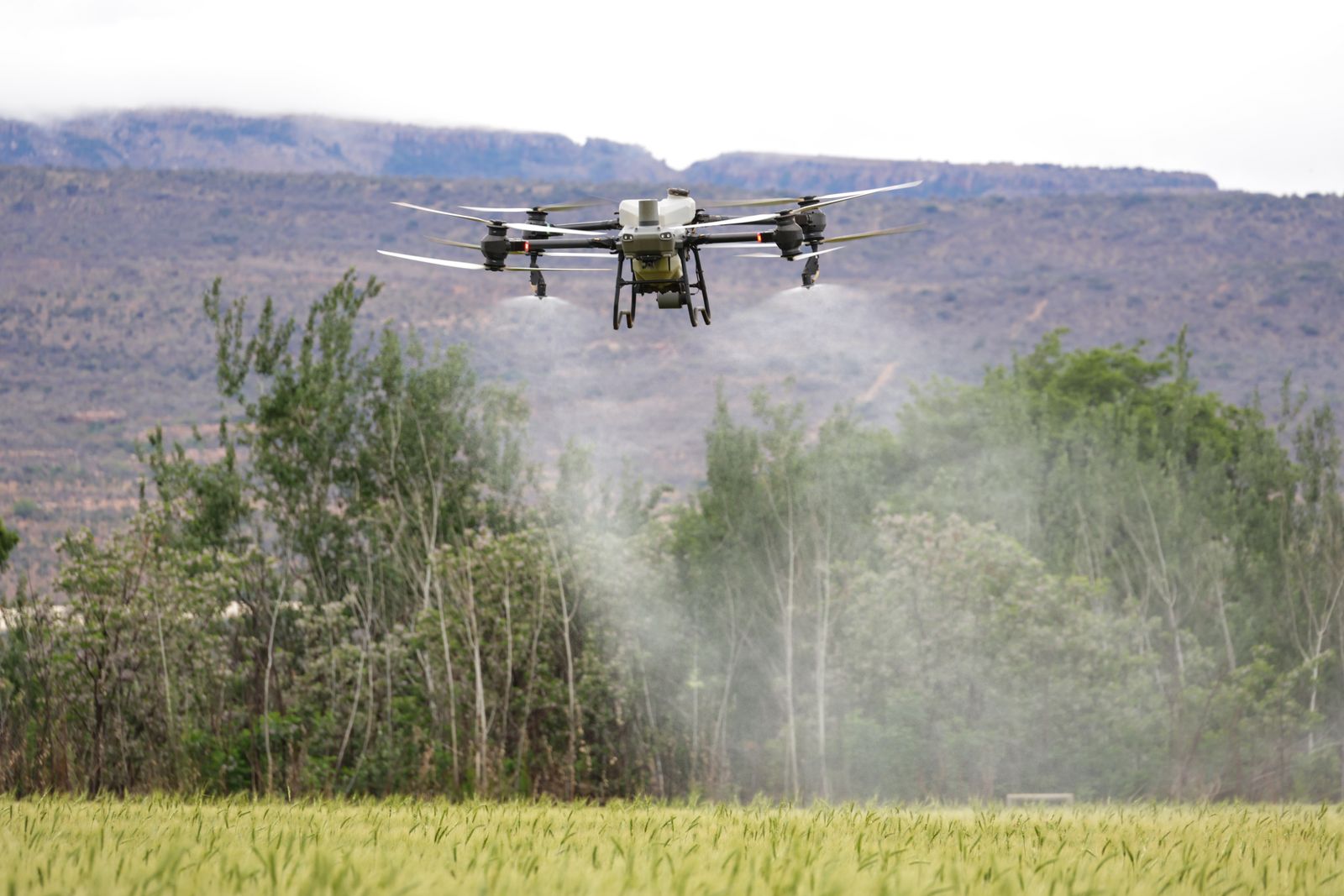
Drone Spraying in Manitoba: Where It Fits in Modern Farm Operations
Wet ground, short spray windows, and a shrinking labour pool are reshaping how Manitoba growers get product on the field. Here's an honest look at where the DJI Agras fleet earns its place — and where it doesn't.
Why Spray Timing Is So Difficult in Manitoba
Ask any Manitoba grower what keeps them up at night in June, and the answer is rarely the chemical — it's the window to apply it.
Between the Red River Valley's heavy clay and the low-lying pockets across the Interlake and Parkland regions, spring moisture doesn't leave the field on anyone's schedule. Ground rigs that could cover 200 acres before lunch get parked for days waiting for soil to firm up, and every day lost narrows an already tight application window set by crop stage, wind, and dew.
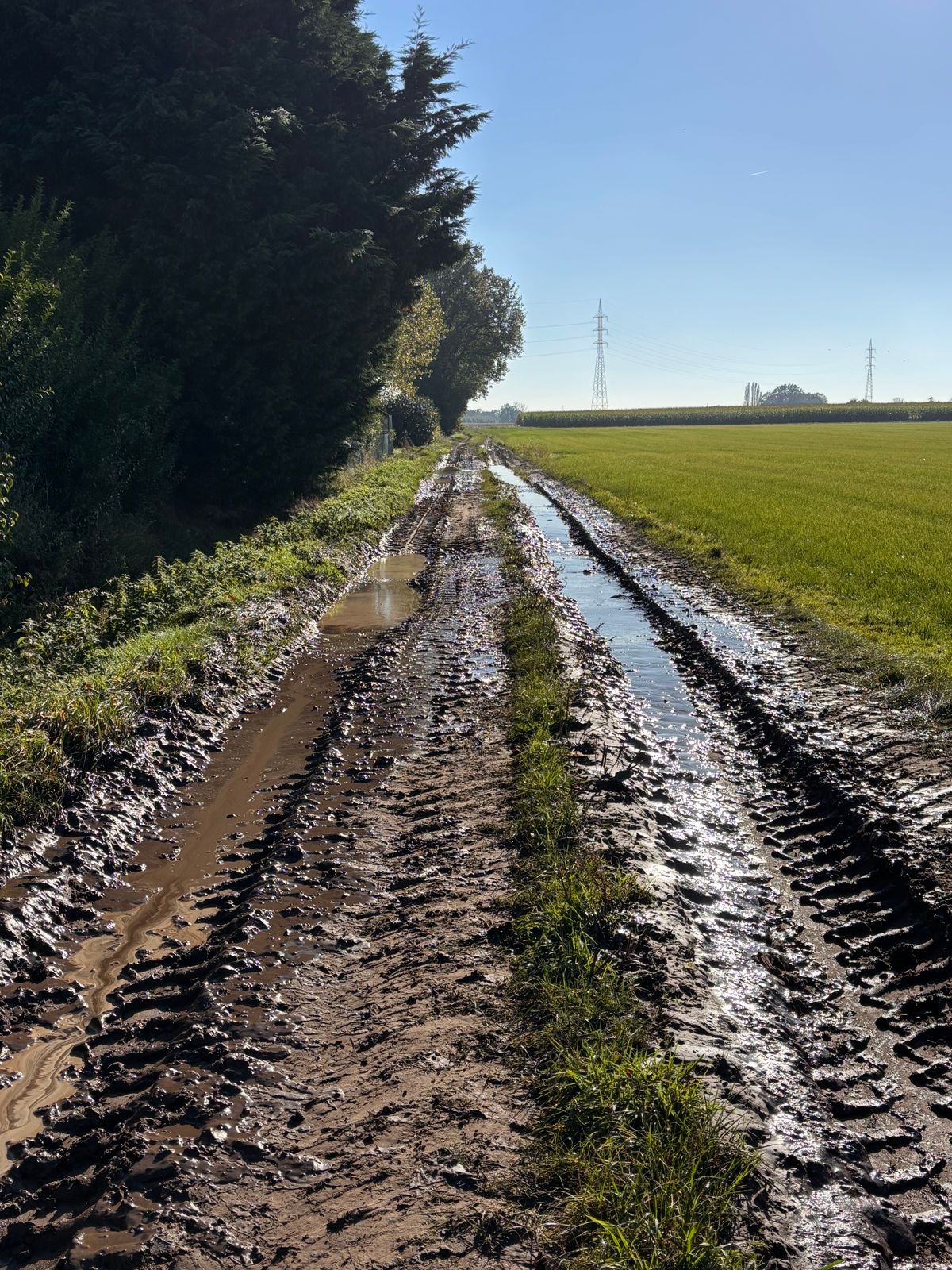
Add in a labour market where experienced sprayer operators are hard to find and harder to keep during the two or three weeks a year when they matter most, and the math starts to favour equipment that doesn't need firm ground, doesn't compact soil, and doesn't wait for a dedicated operator to be free.
This is the gap Agras drones were built to close — not as a replacement for the sprayer in the yard, but as a tool that opens up field days a ground rig simply can't touch.
Where the Agras Fleet Fits
Vantage carries five platforms across the DJI Agras line, and the right one depends far more on field shape and job type than on acreage alone.
DJI Agras T25 — the nimble option
Built for small to mid-sized farms, tight headlands, and irregular terrain — shelterbelts, waterways, market garden blocks, and orchard rows where a larger airframe loses its advantage. With a 20 kg spray tank and 25 kg spreading capacity, the T25 trades raw volume for manoeuvrability.
DJI Agras T50 — the workhorse
The T50 is the platform most custom applicators reach for first. Heavier payload, stronger pump output, and advanced obstacle avoidance make it the practical middle ground for mixed grain and oilseed operations covering several hundred to a few thousand acres a season.
DJI Agras T55 — the versatile step-up
The newest addition to the fleet, added to DJI's lineup in July 2026. The T55 carries a 50 L spray tank (40 L/min through dual centrifugal nozzles, up to 50 L/min with the optional four-nozzle mist kit) and spreads at 55 kg with a 400 kg/min flow rate. It also adds lifting capability up to 40 kg, so the same airframe can spray, spread, and move light loads around the yard. An upgraded, radar-guided safety system and an onboard battery heat sink make it a strong step up for operations outgrowing a T25 or T50 but not yet ready for the size and cost of a T100.
DJI Agras T70P — the efficiency expert
Sitting just below the T100, the T70P carries a 70 kg payload for spraying, spreading, or lifting, built around a carbon-fibre airframe with IPX6K wash-down protection and Safety System 3.0 for round-the-clock obstacle awareness. Fast-swap smart batteries with ultra-fast charging keep it cycling with minimal downtime, making it a good fit for operations that need T100-level throughput on fields that don't quite call for the full 100 kg platform.
DJI Agras T100 — the broadacre answer
With a 100 kg payload, the T100 is built for operators running high-volume programs across large, flat blocks where minimizing refill cycles matters more than tight manoeuvring. It's the platform for teams treating serious acreage in a compressed window.
| Platform | Payload | Best suited to | Typical operator |
|---|---|---|---|
| Agras T25 | 20 kg spray / 25 kg spread | Small-mid farms, irregular fields, orchards | Owner-operator |
| Agras T50 | 40 kg spray / 50 kg spread | Mixed grain & oilseed, several hundred+ acres | Farm crew or custom applicator |
| Agras T55 | 50 L spray / 55 kg spread / 40 kg lift | Growers wanting spray, spread & lift in one platform | Farm crew stepping up from T25/T50 |
| Agras T70P | 70 kg spray or spread | Large acreage needing T100-level throughput | Custom applicator, service provider |
| Agras T100 | 85 kg spray / 100 kg spread | Large flat blocks, high-volume programs | Custom applicator, service provider |
Payload figures reflect DJI Agras manufacturer specifications. Actual field capacity varies with product, terrain, and battery cycle.

Targeted Application vs. Full-Field Spraying
One of the biggest shifts drones bring to a Manitoba operation isn't speed — it's precision. Because Agras drones fly from a prescription map, a grower can direct product only where it's needed: a weed-resistant patch along a fence line, a disease hot spot in a low corner, or a headland that always needs a second pass.
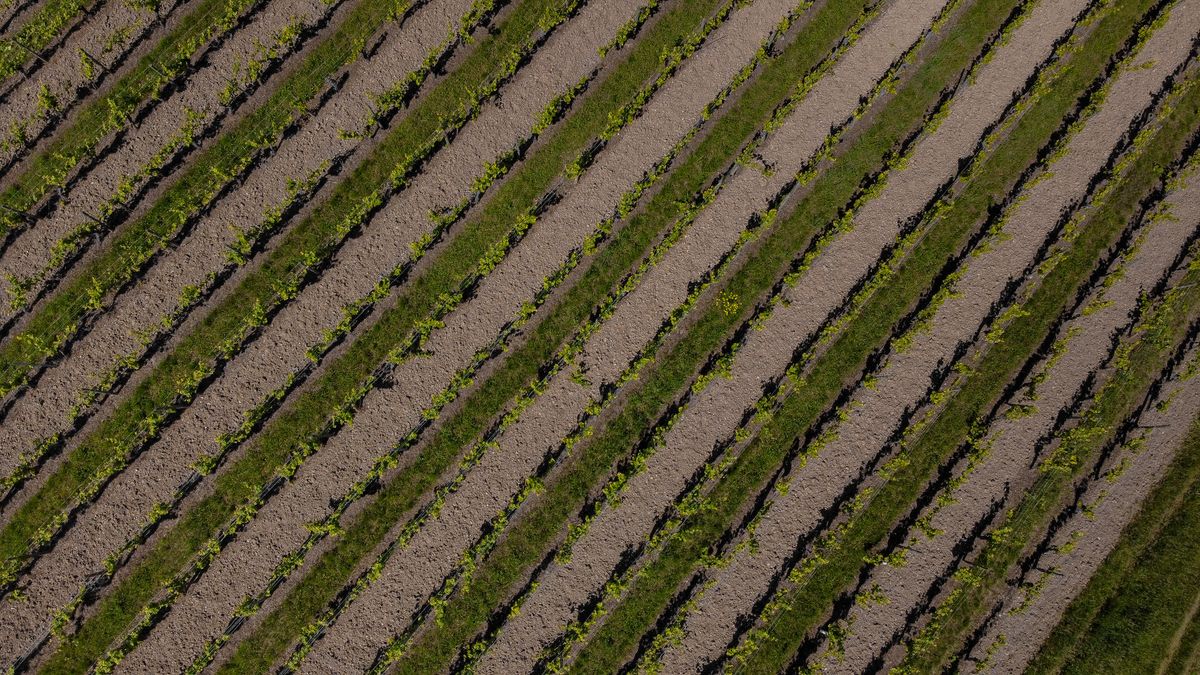
That said, targeted spraying isn't a replacement for a full-field pass every time. A fungicide application timed to crop stage across an entire cereal field still calls for even, whole-field coverage — the drone simply does that pass without needing dry, firm ground underneath it. The value is having both options available from the same platform.
Water, Staging, Batteries, and the Logistics Nobody Mentions
The drone itself is the easy part. What actually determines how many acres get covered in a day is the ground support around it — and that's where new operators are most often caught off guard.
A dependable water source — a nurse tank, dugout, or rural hydrant — needs to sit close enough to the field to keep refill trips short. Mixing and staging should happen away from the flight path, with clear roles for whoever is batching product and whoever is loading the drone. Batteries are the real throughput bottleneck: most crews run a generator or truck-mounted charging bank so one set of batteries is always charging while another is flying. Get the staging area right, and a two- or three-person crew can keep an Agras platform in the air nearly continuously through a spray day.
Health Canada Opens the Door: PMRA's June 2026 Ruling on Drone Spraying
For years, the single biggest legal obstacle to drone spraying in Canada wasn't the aircraft — it was the product label.
Until this year, a grower could own the most capable Agras platform on the market and still be unable to legally spray most registered herbicides, fungicides, or insecticides by drone. Health Canada's Pest Management Regulatory Agency (PMRA) — now organized under the Pesticides Regulatory Directorate (PRD) — only permitted RPAS application for pest control products whose label explicitly named drones as an approved method, and very few labels did. That single restriction, more than any equipment limitation, was what kept drone spraying a niche activity in Canadian fields.
PMRA released Regulatory Proposal PRO2026-01 for public consultation, outlining a plan to permit RPAS application of any pesticide already registered for conventional aerial spraying.
The PRD issued a Letter of No Objection to the Canadian Agricultural Drone Association, creating an interim pathway for farmers to apply any pesticide already registered for aerial application by drone while the final policy was completed.
The PRD finalized Science Policy Notice SPN2026-02, permanently allowing drone application for any pest control product already registered for conventional aerial application, under the same label directions — no separate RPAS label amendment required.
In practical terms, this removes the biggest legal ceiling on drone spraying in Canada. Instead of waiting on a product-by-product label amendment, an operator can now apply any pesticide already cleared for aerial use — provided they follow that product's existing aerial-application directions for rate, water volume, and buffer zones. It doesn't relax anything else: Transport Canada RPAS certification and provincial pesticide applicator licensing, covered below, still apply in full, and drift and setback rules on the label still have to be followed.
For Manitoba growers weighing whether the Agras fleet fits their operation, this ruling is the difference between "eventually, for a handful of products" and "now, for most of what's already in the sprayer shed." We expect it to be the biggest driver of drone spraying adoption in Canadian agriculture this season.
Source: Health Canada, Pest Management Regulatory Agency / Pesticides Regulatory Directorate — Science Policy Notice SPN2026-02, Allowing Pesticide Application by Remotely Piloted Aircraft Systems (30 June 2026).
Training and Compliance Considerations
Flying an Agras drone commercially in Manitoba isn't a matter of buying the equipment and taking off. Operators need a Transport Canada RPAS pilot certificate appropriate to the operation, along with the applicable provincial pesticide applicator licensing for aerial application. Buffer zones near waterways, dwellings, and sensitive crops still apply, and insurance coverage needs to reflect commercial aerial application, not recreational flight.
An RPAS pilot certificate matched to the operation's weight category and flight environment.
Required for anyone applying regulated product aerially, in addition to flight certification.
Confirming liability coverage is written for aerial application work, not general drone use.
This is where Vantage's own footprint matters. Our training programs, delivered through the Vantage Drone School, are built to Transport Canada standards and developed alongside our equipment partnership with Green Aero Tech — so the same team selling and servicing the drone is the one training the pilot who flies it.
When Drone Spraying Makes Sense — And When It May Not
The honest answer is that drone spraying is a strong fit for a specific set of conditions, not a universal replacement for the sprayer already in the yard.
Wet, rutted, or rolling fields where ground equipment risks getting stuck or compacting soil.
Irregular fields — shelterbelts, waterways, odd-shaped corners — where a boom loses efficiency.
Spot treatment of resistant weed patches or disease hot spots identified from scouting or imagery.
Operations facing a genuine labour shortage during peak application weeks.
Very large, flat, dry fields where a high-clearance sprayer can already cover ground faster per hour.
High-volume, full-field passes where cost per acre still favours a conventional boom at scale.
Operations without reliable access to water staging or battery charging infrastructure nearby.
Crews not yet certified — factor training time into the season, not just equipment lead time.
See the Agras Fleet Working Your Ground
Bring a T25, T50, T55, T70P, or T100 to your own field and see how it handles your terrain, your water source, and your spray program.
Book a Field Demo